
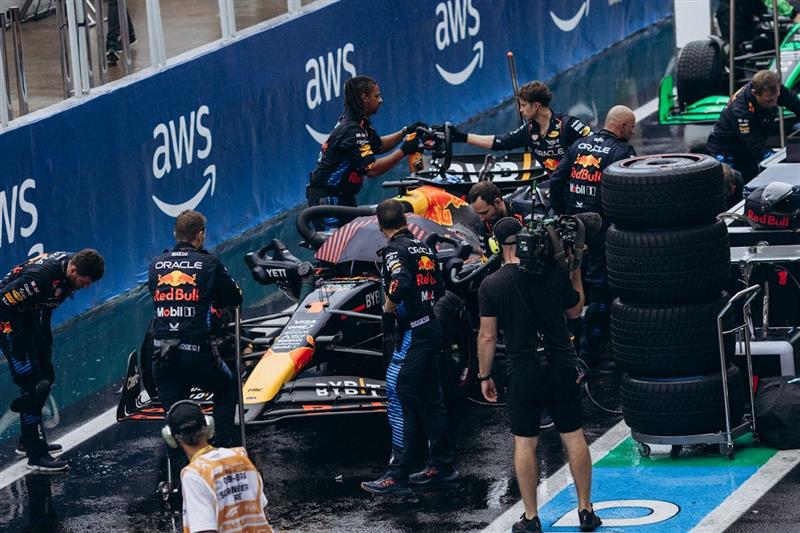
Picture by: Jonathan Borba
If you watch Formula 1 casually, it looks simple. The fastest car wins, the driver sprays champagne, and everyone goes home happy.
But if that were true, teams would save millions and simply buy faster engines.
In reality, races are often won somewhere far less glamorous than the track.
They are won in rooms full of engineers staring at screens, drinking coffee, and debating when exactly to call a pit stop.
Over the past few seasons, Oracle Red Bull Racing has quietly added a powerful member to that strategy team: AI driven simulations powered by Oracle Cloud.
Before and during every race weekend, Red Bull engineers run millions of simulations. These models analyze tire wear, track temperature, weather changes, safety car probabilities, and competitor behavior.
In simple terms, while the driver is doing 300 km per hour on track, someone behind a laptop is asking a very important question:
What are the other teams about to do next?
The impact of this approach has been hard to miss. In the 2023 Formula 1 season, Red Bull won 21 out of 22 races, one of the most dominant seasons in the sport’s history. While the car and drivers were exceptional, predictive simulations and real time data analysis helped teams make crucial calls such as when to pit or when to push.
The interesting part is that AI does not make the decision.
The strategists still do.
Think of AI less as the boss and more as the extremely smart intern who has already analyzed every possible race scenario before the meeting even begins.
Red Bull team principal Christian Horner once summed up the importance of strategy perfectly:
“In Formula 1, the race is not just won on the track. It is won through strategy.”
Source: Red Bull Racing media briefings.
The lesson for organizations is striking.
AI’s real advantage is not automation. It is better decision support.
At Athiya, many of our conversations with organizations now revolve around this idea. We help teams explore how AI can support everyday work from project management and client conversations to learning design and even planning team experiences.
Because sometimes the biggest competitive advantage is not speed.
It is making the right decision one lap earlier than everyone else.